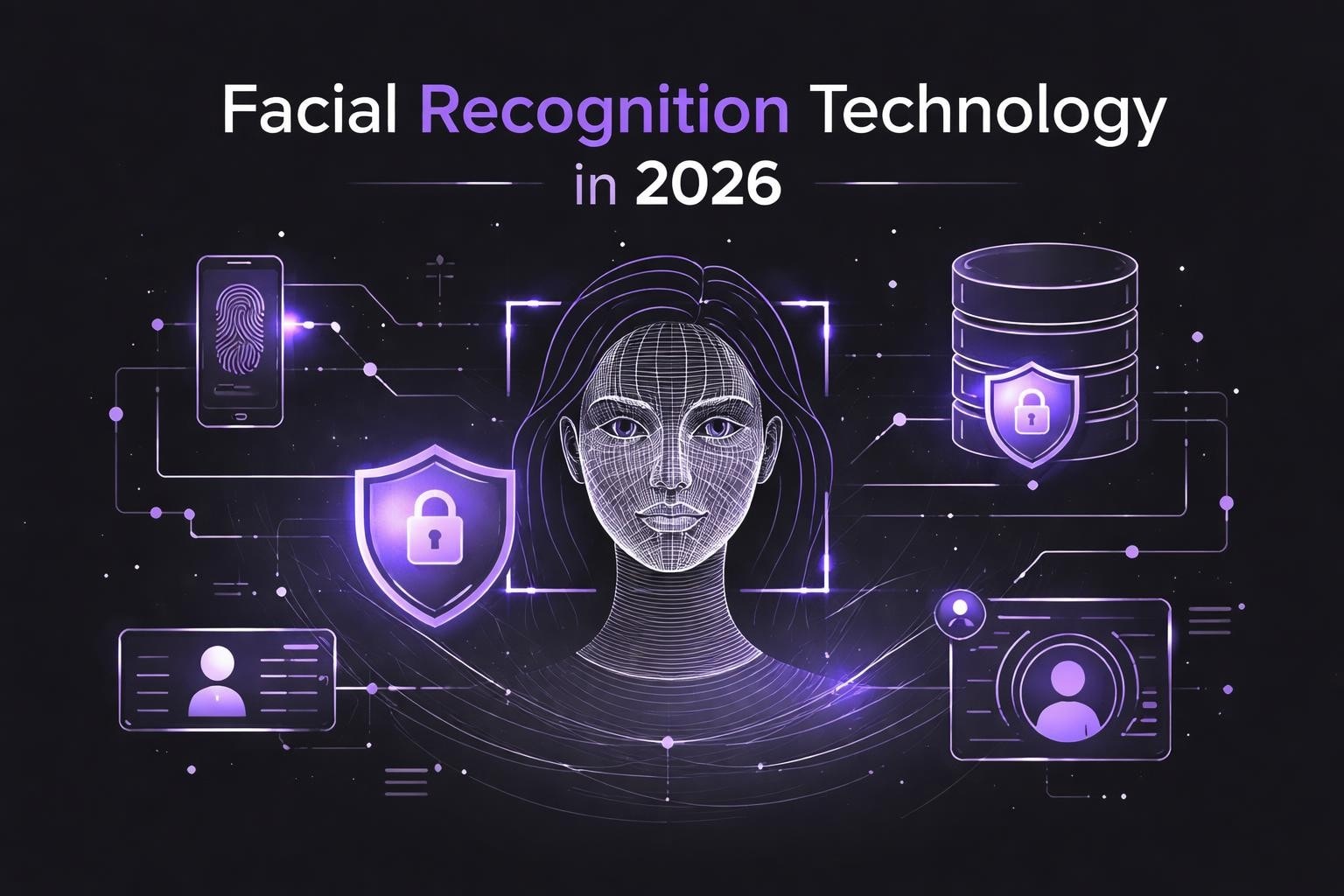
The term “driven face” has evolved significantly beyond its traditional engineering applications to encompass a new reality in our technology-saturated world. While historically referring to mechanical systems and precision manufacturing processes, the concept now intersects with facial recognition technology and the data-driven surveillance infrastructure shaping our daily lives. Understanding this evolution helps individuals comprehend how their biometric information becomes a driving force behind modern identification systems, tracking mechanisms, and privacy challenges that define 2026.
The Engineering Origins of Driven Face Systems
In mechanical engineering, a driven face represents a critical component in various rotating equipment and precision machinery. The fundamentals of face driving demonstrate how this technology allows complete machining of workpieces in single operations, revolutionizing manufacturing efficiency since its inception.
Traditional driven face applications include:
- Mechanical seals that prevent leakage in rotating equipment
- Face gear drives used in aerospace and automotive systems
- Rotary ultrasonic motors with dual driving capabilities
- Precision grinding operations requiring complete surface access
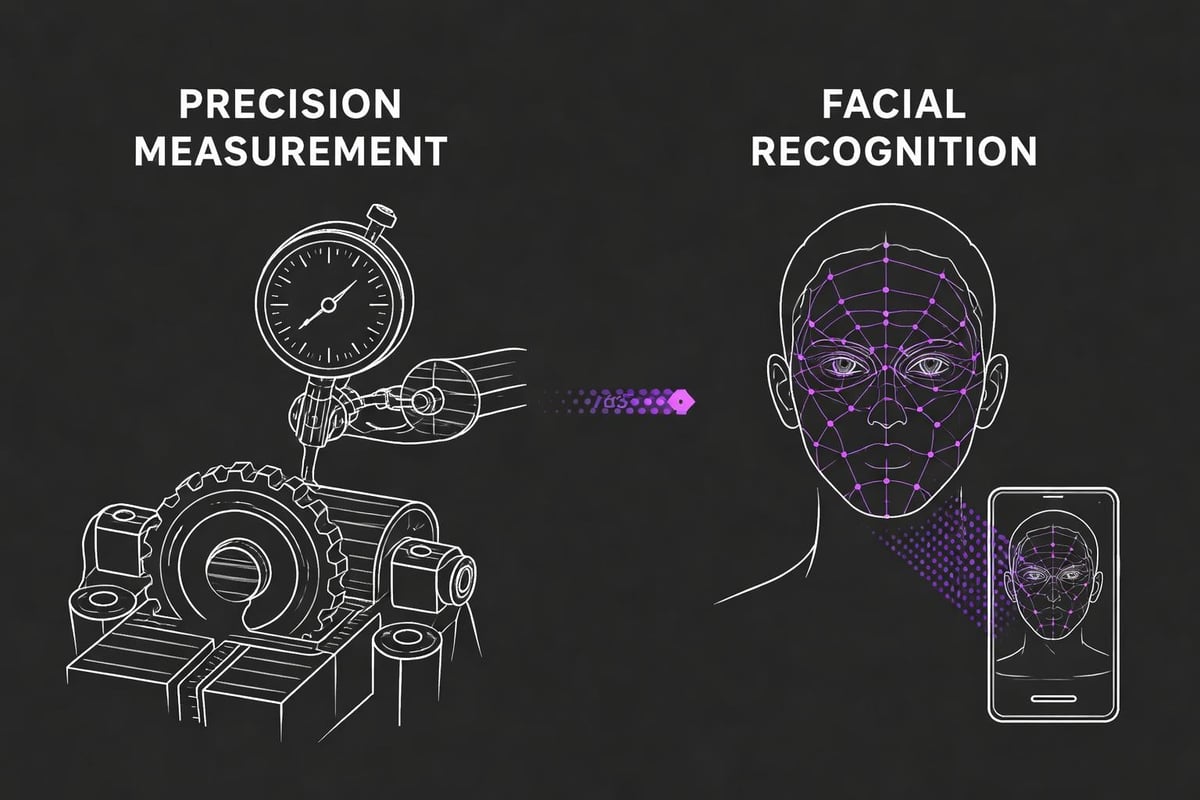
The engineering precision required for these systems laid groundwork for understanding surface-level interfaces and contact points. End-face mechanical seals exemplify how driven face technology ensures tight tolerances and reliable performance in critical applications. These mechanical principles share surprising parallels with modern biometric systems that analyze facial surfaces with similar precision.
From Mechanical to Biometric Applications
The transition from mechanical driven face systems to biometric analysis represents a technological convergence. Just as engineers analyze surface characteristics, thermal behavior, and contact patterns in face gear drives and their temperature fields, facial recognition systems now map human features with comparable detail.
Modern facial recognition creates what could be called a “data-driven face”-a digital representation derived from analyzing dozens of facial landmarks, textures, and measurements. This biometric profile becomes the driving force behind identification systems used across industries and government agencies.
The Privacy Implications of Data-Driven Face Recognition
In 2026, facial recognition databases operate globally with unprecedented scale and sophistication. The driven face of modern surveillance isn’t just a photograph-it’s a comprehensive biometric signature that follows individuals across digital and physical spaces.
Key privacy concerns include:
- Persistent tracking across public and private locations
- Database aggregation combining data from multiple sources
- Consent bypass through automated capture systems
- Cross-border data sharing between governments and corporations
- Algorithm bias affecting accuracy and fairness
The United States presents particularly complex challenges, with limited federal regulations on facial recognition allowing widespread adoption by law enforcement, retailers, and technology platforms. Citizens often discover their facial data exists in dozens of databases without explicit consent or notification.
The Global Landscape of Facial Recognition
Different regions approach driven face technology and privacy with varying regulatory frameworks:
| Region | Regulatory Approach | Database Prevalence | Individual Rights |
|---|---|---|---|
| European Union | Strict GDPR enforcement | Moderate | Strong opt-out rights |
| United States | State-by-state variation | High | Limited federal protection |
| China | Government-driven expansion | Very High | Minimal individual control |
| United Kingdom | Post-Brexit framework | High | Evolving protections |
The European Union’s privacy standards represent one of the most comprehensive frameworks, yet even these regulations struggle to keep pace with technological advancement. Meanwhile, regions with fewer restrictions see explosive growth in facial recognition deployment across retail, transportation, and public safety sectors.
Understanding How Your Face Drives Modern Databases
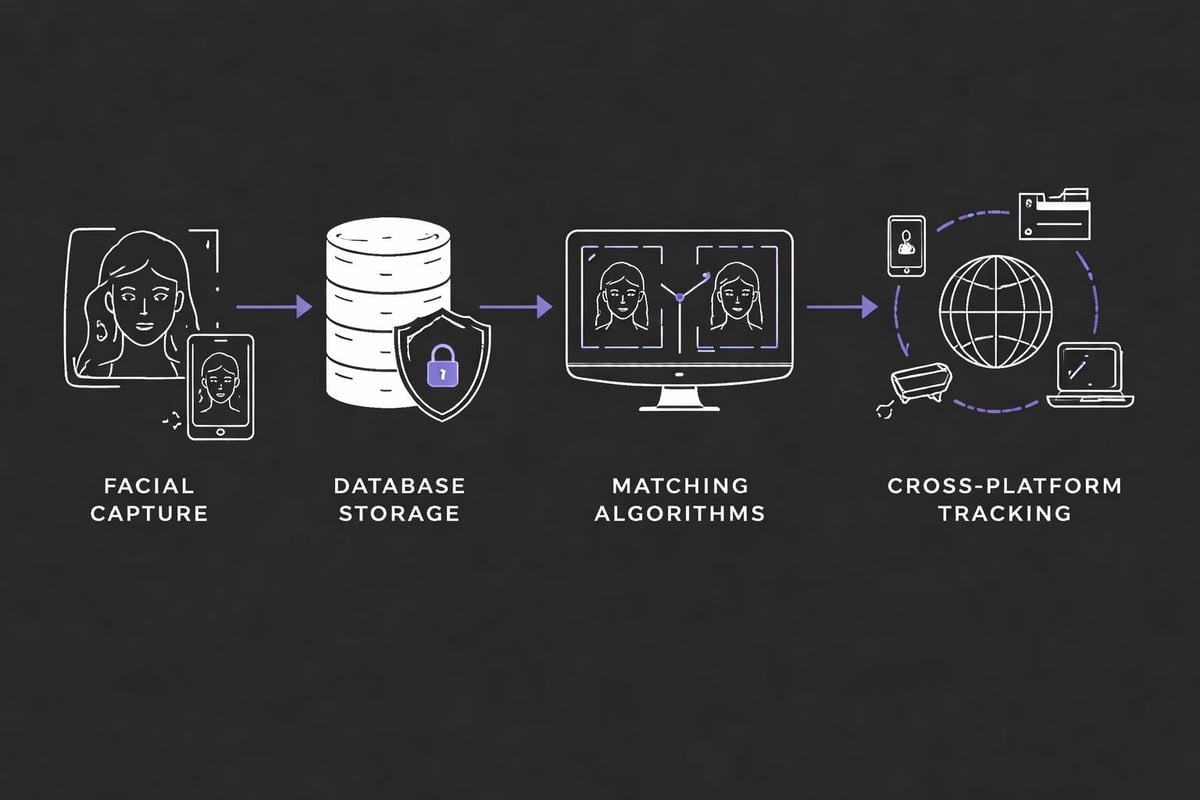
The concept of a driven face extends beyond simple image storage. Modern recognition systems create mathematical representations called “faceprints” that encode unique characteristics into searchable data structures. These digital signatures become the driving mechanism for matching, tracking, and profiling individuals across interconnected systems.
Database operators typically collect:
- Geometric measurements between facial features
- Texture analysis of skin and surface characteristics
- Three-dimensional depth mapping from multiple angles
- Thermal signatures in advanced systems
- Gait and behavioral patterns for enhanced identification
This comprehensive data collection transforms every face into a driven identifier-constantly working to connect individuals with their activities, locations, and associations. The various databases tracking facial information range from government agencies to social media platforms and private corporate systems.
The Technical Architecture Behind Recognition Systems
Modern driven face recognition operates through sophisticated neural networks trained on millions of facial images. These systems learn to identify invariant features that remain consistent across lighting conditions, angles, and aging processes.
The technical pipeline includes:
- Image acquisition through cameras and sensors
- Face detection isolating faces from backgrounds
- Feature extraction creating mathematical representations
- Database matching comparing against stored faceprints
- Identity confirmation returning probable matches
Research into advanced motor designs and rotary systems provides insight into the precision engineering mentality that shapes biometric algorithms. Just as mechanical systems require exact tolerances, facial recognition demands algorithmic accuracy to minimize false positives and negatives.
Industry Applications Driving Facial Data Collection
Businesses across sectors deploy driven face technology for various purposes, creating an interconnected web of biometric surveillance that most individuals never consented to explicitly.
Common commercial applications:
- Retail analytics tracking customer movements and demographics
- Access control replacing traditional key card systems
- Payment authentication enabling biometric transactions
- Employee monitoring measuring productivity and attendance
- Marketing personalization targeting advertisements based on recognition
The retail sector particularly embraces this technology, with major chains installing cameras that create driven face profiles for every customer entering their stores. These systems track shopping patterns, dwell times, and emotional responses to products-all without explicit notification or consent mechanisms.
The Hidden Cost of Convenience
Many consumers willingly participate in facial recognition systems through smartphone unlocking, social media tagging, and airport security programs. However, these voluntary interactions often feed into larger databases that serve purposes far beyond the original consent scope.
Consider how a simple photo tag on social media becomes part of a driven face dataset used to train commercial recognition algorithms. That training data then powers systems deployed by retailers, law enforcement, and government agencies worldwide-creating a cascade of privacy implications from a single innocent interaction.
Regulatory Responses and Individual Rights
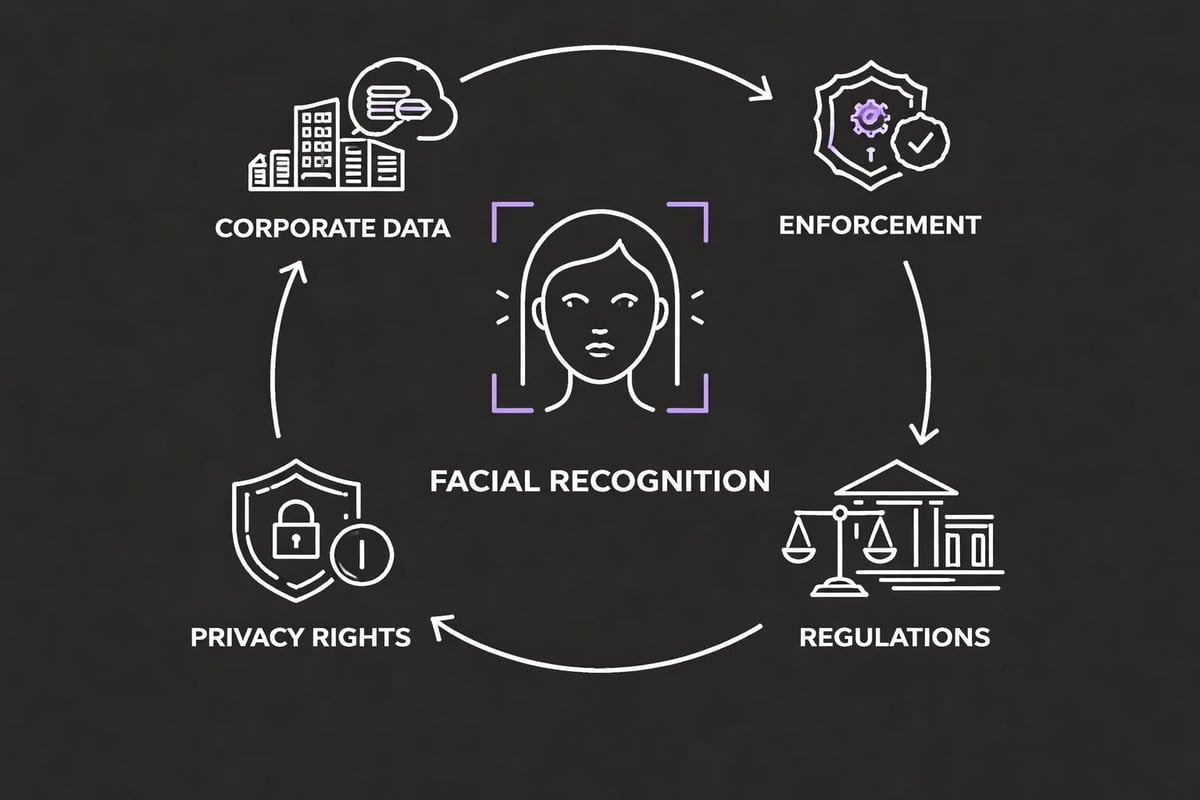
Governments worldwide are slowly developing frameworks to address driven face technology and its privacy implications. However, regulation consistently lags behind technological deployment, leaving individuals vulnerable during the gap.
Recent regulatory developments include:
- Biometric privacy laws in Illinois, Texas, and Washington
- European Union restrictions on real-time facial recognition
- Proposed federal legislation in various countries
- Municipal bans on government use in select cities
- Industry self-regulation initiatives with limited enforcement
The privacy protections available in Canada demonstrate how some nations balance security interests with individual rights, though implementation remains inconsistent. Meanwhile, Australia’s approach shows the challenges of regulating technology that crosses jurisdictional boundaries.
Your Rights Regarding Facial Data
Understanding your legal position regarding driven face databases requires navigating complex and often contradictory regulations:
| Right | Availability | Enforcement | Practical Barriers |
|---|---|---|---|
| Know what’s collected | Limited | Weak | Opacity of systems |
| Access your data | Varies by jurisdiction | Moderate | Verification challenges |
| Request deletion | Growing | Inconsistent | Multiple databases |
| Opt-out of collection | Rare | Minimal | Public space exceptions |
| Compensation for misuse | Emerging | Strong in limited areas | Proving damages |
The driven face ecosystem operates largely without meaningful individual consent or control. Even in jurisdictions with stronger privacy laws, enforcement mechanisms struggle to compel compliance from international operators or government agencies claiming security exemptions.
Technological Countermeasures and Protection Strategies
As driven face technology proliferates, individuals and advocacy groups develop countermeasures to protect privacy and limit unauthorized biometric collection.
Available protection approaches:
- Physical obfuscation using accessories that confuse recognition algorithms
- Digital opt-outs requesting removal from voluntary databases
- Legal challenges asserting privacy rights through litigation
- Awareness campaigns educating consumers about hidden surveillance
- Technical solutions employing services that monitor and remove facial data
The effectiveness of physical countermeasures like specialized makeup or glasses patterns remains debatable as algorithms evolve. More reliable protection comes from systematically removing facial data from existing databases and monitoring for reappearance.
The Role of Privacy Services
Professional privacy services have emerged to help individuals reclaim control over their driven face data. These platforms navigate the complex landscape of removal requests, database monitoring, and ongoing protection against reappearance in recognition systems.
Effective privacy protection requires:
- Comprehensive database identification across government and corporate systems
- Verified removal processes ensuring data deletion
- Continuous monitoring detecting new appearances
- Legal compliance support leveraging applicable regulations
- Documentation tracking maintaining records of opt-out requests
The comprehensive approach offered by privacy-focused platforms addresses the reality that facial data often exists across dozens of interconnected databases. Single-database removal provides false security when the same biometric profile persists in other systems that continue sharing and matching.
The Future of Driven Face Technology
Looking forward, the driven face landscape will likely intensify before meaningful privacy protections become standard. Several trends suggest expanding surveillance rather than contraction:
Emerging developments include:
- Integration with augmented reality systems for real-time identification
- Thermal and multispectral imaging bypassing traditional countermeasures
- Behavioral biometrics combining facial recognition with gait analysis
- Predictive analytics using facial data to assess intentions and emotions
- Decentralized blockchain-based identity systems with facial components
The convergence of artificial intelligence and biometric technology creates systems where every face becomes a continuously active identifier-driven by algorithms that never forget and constantly cross-reference against expanding databases. Similar to how cam mechanisms convert rotary motion into specific output patterns, modern recognition systems transform facial features into actionable intelligence for various stakeholders.
Building a Privacy-Conscious Future
The challenge facing society involves balancing legitimate security and convenience benefits against fundamental privacy rights. The current trajectory favors surveillance expansion, but growing awareness and regulatory action suggest potential course corrections.
Individuals can influence this future by:
- Demanding transparency from organizations collecting facial data
- Supporting privacy-protective legislation
- Exercising available opt-out rights consistently
- Choosing services and vendors that minimize biometric collection
- Educating others about the driven face surveillance ecosystem
The technical sophistication of modern recognition systems makes individual action alone insufficient. Comprehensive protection requires systematic removal from existing databases, ongoing monitoring to prevent reappearance, and advocacy for stronger regulatory frameworks that prioritize privacy over convenience.
Taking Control of Your Facial Privacy
The reality of driven face technology in 2026 means that passive acceptance leads to comprehensive surveillance. Most individuals have biometric profiles scattered across dozens of databases they never explicitly authorized, creating privacy vulnerabilities that compound over time.
Immediate steps include:
- Audit your digital presence for facial images and tagging
- Review privacy settings on social media and photo services
- Request information from data brokers about stored biometric data
- File removal requests with accessible databases
- Monitor for reappearance after initial removal
However, the scale and complexity of the driven face ecosystem overwhelms individual effort. Databases number in the hundreds globally, each with different removal processes, verification requirements, and response timelines. Many operate without public-facing removal mechanisms or transparency about their data sources.
Professional assistance becomes necessary when addressing the full scope of facial data proliferation. Services specializing in biometric privacy navigate the technical and legal complexities involved in comprehensive data removal and ongoing protection.
Understanding driven face technology and its privacy implications represents the first step toward reclaiming control over your biometric identity. The convergence of mechanical precision and algorithmic sophistication has created surveillance infrastructure that operates largely beyond individual awareness or consent. Taking action to remove your facial data from recognition databases and monitor for reappearance provides tangible protection against unwanted tracking and profiling. FacePrivacy offers comprehensive solutions for individuals seeking to reclaim their facial privacy through verified database removal, ongoing monitoring, and secure opt-out management across the expanding ecosystem of recognition systems.
Article written using RankPill.
Leave a Reply