
Category: Uncategorized

  • Revolutionizing Communication: Speech Recognition AI Unleashed

    Revolutionizing Communication: Speech Recognition AI Unleashed

    Evolution of Voice Recognition

    Historical Milestones

    Voice recognition tech has come a long way since its humble beginnings. Back in the day, Bell Labs kicked things off in the 1980s with the first speech recognition system. It was pretty basic, only understanding a handful of words and phrases (Impala Intech). But hey, you gotta start somewhere, right?

    Fast forward to the 1990s, and things started to get interesting. Hidden Markov Models (HMMs) came onto the scene, making speech recognition systems way more accurate and efficient. This was also when dictation software started popping up, and folks began to see the potential of talking to their computers.

    Then came the game-changers: virtual assistants like Siri, Google Assistant, and Alexa. These guys took voice AI to a whole new level, becoming household names and making our lives a tad easier. They’ve gotten a lot better over the years, too—quicker, smarter, and more useful than ever.

    Modern Applications

    Voice AI isn’t just for asking your phone about the weather anymore. It’s spread its wings and found a home in all sorts of industries. In healthcare, it’s helping doctors with paperwork so they can spend more time with patients. In finance, it’s making customer service smoother and keeping transactions secure (Impala Intech).

    In hospitals, voice recognition systems are busy transcribing medical records, freeing up doctors to do what they do best—care for patients. Over in the finance world, voice AI is verifying transactions and lending a hand with customer support, making life a bit easier for everyone involved.

    Voice recognition tech is everywhere these days. Just look at the UK, where 9.5 million folks are using smart speakers—a big jump from 2017 (Verbit). And it’s not stopping there; it’s only going to keep growing and getting better.

    Industry Application
    Healthcare Medical transcription, patient engagement
    Finance Customer service, transaction verification
    Consumer Tech Virtual assistants, smart home devices

    Curious about more AI advancements? Check out our articles on artificial intelligence image generation and AI chatbots for customer service.

    Benefits of Speech Recognition

    Speech recognition AI is like the Swiss Army knife of tech, offering perks across different fields. Let’s break down how it amps up efficiency, saves money, and jazzes up customer service.

    Efficiency and Automation

    Speech recognition tech is a game-changer for getting stuff done without lifting a finger. Imagine talking to your computer and having it type out your words—no more hunting and pecking on a keyboard. It’s also the magic behind smart home gadgets that let you boss around your lights and thermostat with just your voice.

    Application Efficiency Perk
    Speech-to-Text No-hands computing
    Smart Home Devices Voice-controlled home gadgets

    Businesses that weave speech recognition into their daily grind can speed things up, make security checks a breeze, and just make life easier. Take HSBC, for example—they used voice biometrics to save a whopping £300 million by stopping fraud in its tracks (Verbit).

    Cost-Effectiveness

    Speech recognition AI is a money-saver, plain and simple. In customer service, it’s like having a tireless worker who never sleeps and costs less than a human employee (AI Multiple). This tech cuts down on the need for a big team, slashing costs left and right.

    Sector Money-Saving Perk
    Customer Service Always on, fewer human reps needed
    Security Big bucks saved on fraud prevention

    Plus, when routine tasks get automated, it means less time and effort wasted, which equals more savings.

    Customer Service Enhancement

    Speech recognition AI is the secret sauce for better customer service. It’s like having a super-efficient call center that gets customer questions right every time. This tech understands natural language, making it great for analyzing how customers feel.

    Feature Customer Service Perk
    Natural Language Processing Spot-on understanding of customer questions
    Sentiment Analysis Better chats with customers

    With speech recognition, businesses can tailor experiences and improve interactions between humans and machines, boosting customer happiness. For more on AI chatbots, check out our article on ai chatbots for customer service.

    Speech recognition AI is shaking up how we communicate, making things faster, cheaper, and better for customers. As this tech keeps getting smarter, its uses and benefits will keep growing, turning it into a must-have for all kinds of industries. For more on AI’s latest tricks, peek at our article on uncensored ai technology.

    Challenges in Speech Recognition

    Speech recognition AI has come a long way, but it’s still got some hurdles to jump before it becomes everyone’s go-to tech. We’re talking about accuracy, dealing with different accents, and keeping your data safe and sound.

    Accuracy Concerns

    Getting speech recognition systems (SRS) to understand us perfectly is a big deal. A whopping 73% of folks say accuracy is the main reason they’re not all in on this tech yet. If the system messes up what you’re saying, it can lead to some pretty awkward misunderstandings. Imagine asking for a “pizza” and getting “peanuts” instead—yikes! So, nailing accuracy is crucial for making sure these systems are reliable and trustworthy.

    Challenge Percentage of Respondents
    Accuracy Concerns 73%
    Dialect and Accent Issues 66%
    Privacy and Security Risks 60%

    Dialect and Accent Issues

    Accents and dialects are like the spice of life, but they sure make things tricky for speech recognition AI. With over 160 English dialects out there, it’s a tall order for SRS to keep up with all the different ways people speak. About 66% of folks say these accent-related hiccups are a big reason they’re not jumping on the voice tech bandwagon. We need models that can roll with the punches and understand everyone, no matter how they talk.

    Privacy and Security Risks

    When it comes to voice tech, privacy and security are big concerns. People worry about their voice recordings being used as biometric data, which can lead to some sketchy situations. Companies like Amazon use voice data from devices like Alexa to serve up ads based on what you’re chatting about. This kind of data collection can feel a bit too Big Brother for comfort. Plus, folks are wary of using voice assistants for sensitive stuff like banking, because who wants their financial info floating around in the ether?

    Data privacy is a sticking point for many users, and it’s holding back the adoption of speech recognition tech. Trust is a big deal, and without it, people are hesitant to let voice assistants into their lives. For more on how AI is shaking up communication, check out our article on uncensored AI technology.

    Tackling these challenges head-on will make speech recognition AI more dependable, welcoming, and secure, opening the door to wider use and cooler innovations.

    Implementation of Speech Recognition

    Capital Investment

    Setting up a speech recognition system (SRS) isn’t cheap. Companies have to shell out quite a bit to get these systems up and running. We’re talking about costs for gathering data, training models, deploying the system, and keeping it in tip-top shape. To make sure the system works well, businesses need to invest in huge datasets that cover different languages, accents, and dialects. This helps the system understand and perform better (AI Multiple).

    Cost Component Description
    Data Collection Gathering a variety of voice samples for training
    Model Training Building and refining language models
    Deployment Integrating the system into current setups
    Continuous Improvement Regular updates and accuracy boosts

    Training Language Models

    Training language models is a big deal when it comes to speech recognition AI. This involves feeding the system tons of voice data so it can learn to transcribe spoken language accurately. It takes a lot of time and know-how to get these models just right, especially since they need to handle different speech patterns, accents, and dialects.

    Here’s how it goes down:

    • Data Preprocessing: Cleaning up and organizing voice data for training.
    • Model Selection: Picking the right machine learning algorithms.
    • Training and Validation: Training the model and checking how well it performs.
    • Fine-Tuning: Tweaking the model to boost accuracy and tackle tricky cases.

    Visual Interface Design

    Creating a good visual interface for speech recognition systems is super important. Even though voice user interfaces (VUIs) mainly use sound, adding visual elements can make things easier and more accessible for users. But it’s not all smooth sailing—without visual feedback, users might struggle to understand and interact with the system.

    Designers can tackle these issues by:

    • Providing Visual Cues: Using visual signals to show when the system is listening or processing input.
    • Offering Text Feedback: Showing transcriptions of spoken commands to confirm accuracy.
    • Integrating Multimodal Interaction: Mixing voice and touch inputs for a smoother user experience.

    For more on AI and its cool uses, check out our articles on artificial intelligence image generation and ai chatbots for customer service.

    AI Advancements in Speech Recognition

    Machine Learning Integration

    Machine learning is like the secret sauce that makes speech recognition technology tick. It helps computers turn spoken words into written text without much human sweat (Krisp). By crunching through heaps of data and using smart algorithms, these models can spot patterns in speech, making voice recognition systems sharper and quicker.

    When machine learning gets cozy with speech recognition, it trains models on a mix of speech data, covering different accents, dialects, and languages. This training lets the models get the hang of real-world chatter. Plus, these models are like sponges—they keep soaking up new speech quirks and language twists, getting better with time.

    Neural Network Types

    Artificial neural networks are the brains behind today’s speech recognition systems. Two popular types are Recurrent Neural Networks (RNNs) and Convolutional Neural Networks (CNNs). These networks aren’t just for speech—they’re also handy for translation, image recognition, and more (Google Cloud).

    • Recurrent Neural Networks (RNNs): RNNs are champs at spotting patterns in data sequences, making them perfect for speech tasks. They have a knack for keeping track of context with their internal memory, which helps them make sense of word sequences in sentences.
    • Convolutional Neural Networks (CNNs): CNNs usually shine in image recognition, but they’ve found a spot in speech recognition too. They can pick up on layered features in data, which is great for catching phonetic patterns in speech.

    These neural networks handle the whole speech-to-text process in one go, streamlining the system and boosting performance.

    Industry Applications

    AI speech recognition is shaking up voice communication across different industries. It’s making things more accurate, simplifying processes, analyzing sentiments, personalizing experiences, and improving how machines and humans chat. Here are some ways it’s being used:

    • Customer Service: AI-driven speech recognition can automate customer service chats, cutting down wait times and making customers happier. Check out our article on AI chatbots for customer service.
    • Healthcare: In healthcare, speech recognition helps by transcribing patient notes, allowing hands-free documentation, and boosting the accuracy of medical records.
    • Education: In schools, it aids language learning, offers real-time lecture transcriptions, and supports students with disabilities.
    • Entertainment: Voice-controlled gadgets and apps make gaming, streaming, and other entertainment more fun.
    Industry Application Example
    Customer Service Automated customer interactions
    Healthcare Transcription of patient notes
    Education Real-time lecture transcription
    Entertainment Voice-controlled devices and applications

    Today’s voice AI tech is all about impressive leaps in speech recognition accuracy, language smarts, and Natural Language Generation (NLG). These leaps let modern voice AI systems understand and tackle complex questions with more finesse, showing off the game-changing power of AI in speech recognition.

    For more on where AI is headed and its cool uses, dive into our articles on artificial intelligence image generation and uncensored AI technology.

    Future of Speech Recognition

    Growth Projections

    The voice and speech recognition market is on a fast track to expansion. According to SquadStack, it’s set to hit a whopping USD 27.155 billion by 2026, with a yearly growth rate of 16.8% from 2021 to 2026. This boom is fueled by the rising use of AI tech across different fields.

    Year Market Value (USD Billion)
    2021 11.5
    2022 13.4
    2023 15.7
    2024 18.3
    2025 21.4
    2026 27.155

    Emerging Use Cases

    AI speech recognition is popping up in all sorts of new places. Automatic Speech Recognition (ASR) systems are now part of platforms like Spotify for podcast transcriptions, TikTok and Instagram for live captions, and Zoom for meeting notes. These tools make content easier to access and more fun to use.

    Some cool new uses include:

    • Real-time Transcription: Turning spoken words into text on the fly for meetings, classes, and podcasts.
    • Voice-activated Assistants: Making virtual helpers like Siri, Alexa, and Google Assistant even smarter.
    • Customer Service: Using AI chatbots to answer questions and help out (ai chatbots for customer service).
    • Sentiment Analysis: Checking the mood and feelings in customer chats to boost service.

    Advancements in Accuracy

    AI speech recognition tech is getting sharper all the time. New tricks like end-to-end modeling are making it easier to train these systems, boosting their ability to catch and transcribe speech just right.

    • End-to-End Modeling: Makes training simpler, leading to better results.
    • Sentiment Analysis: Lets the system pick up on emotions and feelings in speech, giving more insight into how people talk.
    • Personalization: Makes the experience better by tuning into how each person talks.

    SquadStack has cooked up its own AI speech recognition model that nails the tricky bits of Indic languages, beating out big names like Google, Whisper, and Amazon (SquadStack).

    For more on the latest in AI tech, check out our piece on uncensored AI technology.

    The future of speech recognition looks bright, with ongoing boosts in accuracy and fresh ways to use it. As this tech grows, it’ll change how we talk to machines and make those interactions even better.
  • AI Censorship Algorithms Unmasked: Behind the Digital Curtain

    Unveiling AI Censorship Algorithms

    The Role of AI in Censorship

    Artificial intelligence is a big player in how information gets controlled these days. Platforms use it to keep an eye on, filter, and manage what info gets out there. These AI systems sift through mountains of data to spot stuff that might break the rules or laws. This automated way means they can jump on harmful or dodgy content faster than a human could.

    AI censorship algorithms are built to spot and handle content based on set rules. These rules might cover things like hate speech, fake news, or explicit stuff. But leaning on AI for censorship brings up questions about how well these systems work and if they’re fair, since they might not always get the context or intent right.

    Understanding Censorship Algorithms

    Censorship algorithms use a mix of tricks to sort through content. Here’s a quick look at some of the main ones:

    Algorithm Type Description
    Keyword Filtering This one’s about scanning for certain words or phrases that are off-limits. If it finds them, the content might get blocked or flagged for a closer look.
    Machine Learning Models These algorithms get smarter over time by learning from data patterns. They tweak themselves based on how users interact and what feedback they get.
    Natural Language Processing (NLP) NLP helps algorithms get the gist and mood of text, making content moderation a bit more sophisticated.

    Knowing how these algorithms tick is key to understanding their impact on how we communicate online. Using AI for censorship can sometimes backfire, like when it stifles legit conversations. Curious about this? Check out our piece on artificial intelligence censorship.

    People often argue about how good these algorithms are, especially when it comes to juggling safety and free speech. As AI keeps getting better, so will the ways we moderate and censor content. Want to know more about the tech behind these systems? Dive into our article on ai filtering technology.

    How AI Filters Content

    AI is like the bouncer at a club, deciding who gets in and who doesn’t. It’s a big deal in keeping things tidy on the internet. Here, we’ll chat about two main ways it does this: automated content moderation and keyword blocking.

    Automated Content Moderation

    Think of automated content moderation as a super-smart robot that checks what people post online. It looks at words, pictures, and videos to see if they follow the rules. These robots learn from tons of examples, so they get pretty good at spotting stuff that shouldn’t be there.

    But, just like us, these robots aren’t perfect. Some are great at catching bad stuff, while others might get confused and make mistakes, like thinking something is bad when it’s not, or missing something that is.

    Moderation Method Accuracy Rate (%) Common Issues
    Basic AI Models 70 – 80 Lots of mistakes
    Advanced AI Models 85 – 95 Sometimes miss the point

    Keyword Blocking and Filtering

    Keyword blocking is like having a list of no-no words. If the robot sees these words, it might take down the post or hide it. This can be handy, but it’s not always smart. Sometimes, it stops good conversations just because they use a word on the list. Plus, different places have different lists, so it’s not always fair.

    Keyword Filtering Approach Pros Cons
    Simple Keyword Lists Easy to set up Blocks too much stuff
    Contextual Keyword Analysis Smarter choices Needs really smart robots

    AI is getting better at this job, changing how we see and share stuff online. Knowing how it works helps us understand what’s happening when our posts disappear or get flagged. Want to know more? Check out our articles on uncensored ai and artificial intelligence censorship.

    Challenges and Concerns

    As AI censorship algorithms become more common, a few bumps in the road pop up, especially when it comes to bias and transparency. These issues can have a big impact on how society functions.

    Bias in AI Algorithms

    Bias in AI can lead to some folks getting the short end of the stick. These algorithms learn from data that might already have some unfairness baked in, which can lead to lopsided results. For example, if an algorithm is mostly trained on data from one group, it might end up favoring that group and ignoring others.

    Here’s a quick look at how bias in AI can mess with content moderation:

    Type of Bias Description Potential Impact
    Racial Bias Algorithms might misjudge or unfairly flag content from certain racial groups. Minority voices could get silenced more often.
    Gender Bias Content about gender issues might get moderated unfairly. Discussions on women’s rights might get pushed aside.
    Political Bias Algorithms might lean towards certain political views. Opposing political opinions could get squashed.

    Fixing bias in AI is key to making sure content moderation is fair for everyone. For more on how AI affects censorship, check out our article on artificial intelligence censorship.

    Lack of Transparency in Censorship

    Another biggie is the mystery surrounding AI censorship algorithms. Many folks have no clue how these algorithms work, what they look for, or why they make certain decisions. This secrecy can lead to mistrust and make people feel like they have no control over their online lives.

    Here’s a breakdown of why transparency in AI censorship matters:

    Aspect Description Importance
    Algorithmic Disclosure Info on how algorithms work and make decisions. Builds trust and accountability.
    User Feedback Mechanisms Ways for users to challenge or comment on moderation decisions. Boosts user involvement and happiness.
    Data Sources Clear info on the data used to train algorithms. Ensures fairness and cuts down on bias.

    Being open about how AI censorship works is crucial for creating a more honest digital space. For more on AI filtering, take a look at our article on ai filtering technology.

    Impact on Digital Freedom

    AI censorship algorithms are shaking up the online world, and not always in a good way. They’re like the bouncers of the internet, deciding who gets in and who doesn’t. This can mess with our digital freedom, making it harder to find information and share ideas. It’s a bit like having a conversation with someone who keeps interrupting you.

    Limitations on Free Speech

    These algorithms can be a real buzzkill for free speech. They filter out stuff they think is inappropriate or harmful, but sometimes they get it wrong. It’s like having a robot decide what’s okay to say at a party. This can squash different viewpoints and shut down open chats. The problem is, these algorithms use set rules that don’t always get the subtleties of how people talk.

    Type of Content Blocked Percentage of Users Affected
    Political Opinions 30%
    Artistic Expression 25%
    Controversial Topics 40%
    Misinformation 15%

    Check out the table above. It shows what kind of stuff gets blocked and how many people it affects. This kind of filtering can make people think twice before speaking up, which isn’t great for free expression.

    Implications for Online Communities

    AI censorship doesn’t just mess with individuals; it shakes up whole online communities. When certain topics keep getting blocked, it can turn these spaces into echo chambers where only the loudest voices get heard. This lack of variety can stop important conversations and stunt the growth of knowledge in these groups.

    Community Type Effect of Censorship
    Social Media Groups Less chatting and sharing
    Forums Fewer ideas bouncing around
    Content Creation Platforms Less creativity and new ideas

    The table above shows how censorship affects different online communities. As these algorithms get smarter, the trick is to find a way to keep things moderated without shutting down open talks. For more on how AI is changing the game, check out our articles on uncensored ai and artificial intelligence censorship.

    Strategies for Transparency

    Tackling the hurdles thrown by AI censorship needs a solid promise to be open and play fair. Here, we dig into two big moves: pushing for AI systems to own up to their actions and making sure AI is built on good morals.

    Advocating for Algorithmic Accountability

    Making AI systems, especially those that censor stuff, answer for what they do is what accountability is all about. Here’s how to make that happen:

    1. Public Disclosure: Companies should spill the beans on how their AI censorship works. This means laying out the data they use and how they decide what stays and what goes.

    2. Independent Audits: Bringing in outside experts to check AI systems regularly can show if they’re fair and doing their job right. These checks can spot biases and suggest fixes, helping users trust the system.

    3. User Feedback Mechanisms: Letting users speak up about moderation choices can boost accountability. Their input can help tweak the algorithms and tackle any censorship worries.

    Accountability Measure Description
    Public Disclosure Sharing algorithm criteria and processes
    Independent Audits Assessing fairness and effectiveness
    User Feedback Collecting input on moderation decisions

    Promoting Ethical AI Practices

    Building AI with a moral compass is key to lessening the bad side of censorship. Here’s what ethical AI should focus on:

    1. Bias Mitigation: Developers need to hunt down and cut out biases in AI. This means using a mix of data and always testing for fairness.

    2. User-Centric Design: AI should be built with the user in mind. Think about how censorship hits different groups and make sure all voices are heard.

    3. Transparency in AI Filtering Technology: Companies should be upfront about the tech behind their AI filters. Explain how it works and why certain moderation calls are made. For more on this, check out our piece on ai filtering technology.

    Ethical Practice Description
    Bias Mitigation Reducing biases in algorithms
    User-Centric Design Considering user impact in design
    Transparency Explaining algorithm functions

    By pushing for AI systems to own up to their actions and sticking to ethical practices, we can aim for a clearer and fairer online space. These moves are vital for tackling the issues around artificial intelligence censorship and making sure AI works for everyone.

  • Ethical AI Design vs. User Freedom

    Balancing ethical AI design with user freedom is a major challenge in today’s AI-driven world. Ethical AI focuses on principles like autonomy, transparency, and fairness, while ensuring users have control over their data and decisions. However, this often limits user freedom, sparking debates about the trade-offs between safety and autonomy.

    Key takeaways:

    • Ethical AI principles include user autonomy, transparent decision-making, and reducing bias.
    • User freedom concerns involve hidden persuasion methods, data rights issues, and restricted AI functionality.
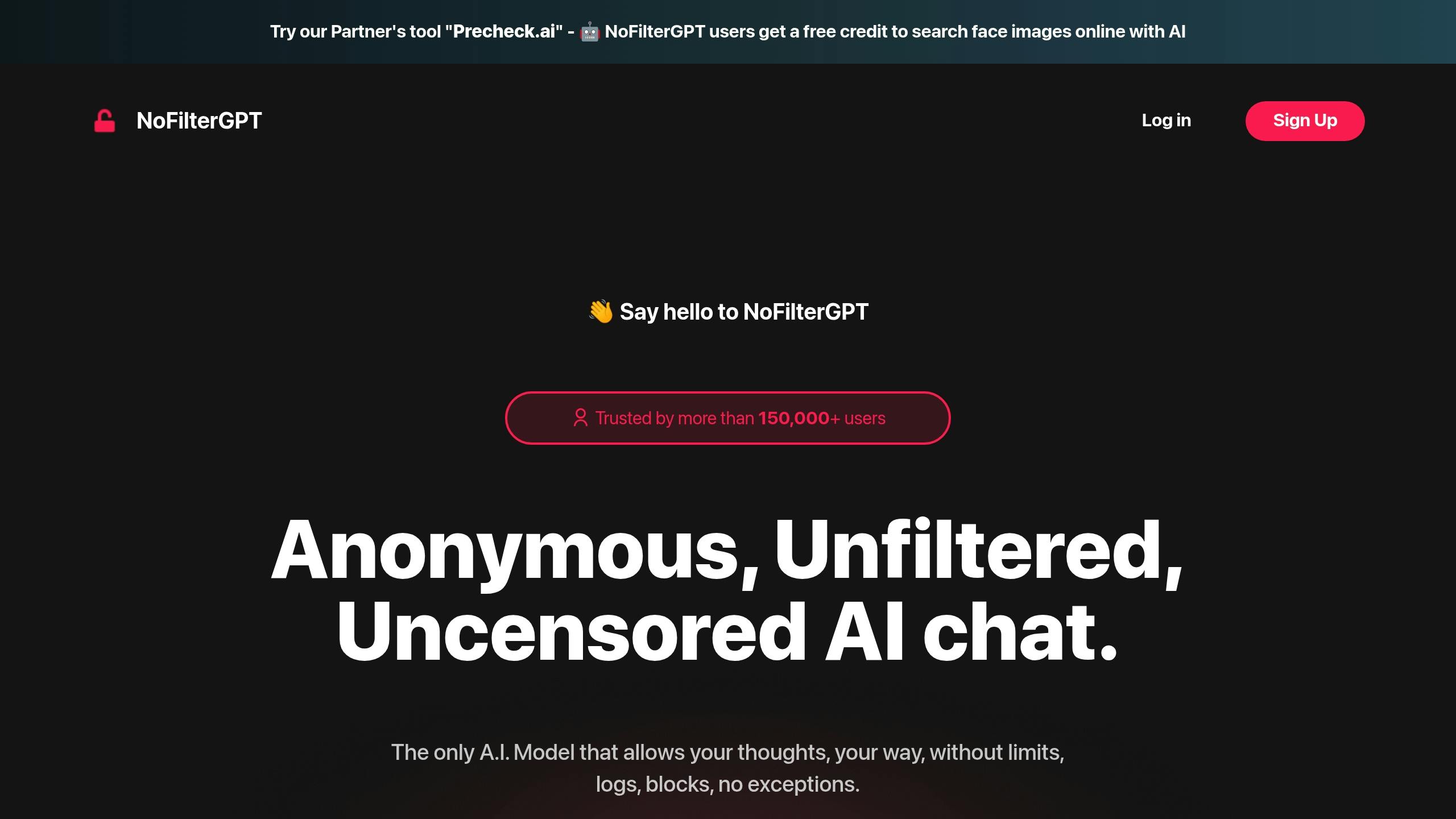
    • Platforms like NoFilterGPT offer unrestricted AI with features like privacy protection but raise risks of unpredictable outputs.
    AspectEthical AI DesignUnrestricted AI (e.g., NoFilterGPT)
    User ControlHigh (opt-out, override options)Limited (freedom prioritized)
    TransparencyClear decision pathwaysMinimal due to lack of filters
    Privacy ProtectionModerate (regulated data use)Strong (no chat logs, encrypted data)
    Risk of BiasReduced with fairness checksHigher without strict safeguards

    The solution lies in combining human oversight with effective user control features like undo options, emergency exits, and ethics preferences. This ensures AI systems remain safe while respecting user autonomy.

    Ethical AI Systems Design

    Core Elements of Ethical AI Design

    Ethical AI design is built on three key principles that aim to balance system performance with user safety and rights. These principles ensure AI systems operate responsibly while respecting human values.

    Protecting User Autonomy

    AI should empower users, not take control away from them. Since AI often manages critical systems, human oversight remains crucial.

    John Havens, Executive Director of The IEEE Global Initiative for Ethical Considerations in AI, highlights this:

    “Until universally systems can show that humans can be completely out of the loop and more often than not it will be beneficial, then I think humans need to be in the loop.” [2]

    Users must have control over their data, the ability to opt out of automated decisions, and the option to override AI recommendations when necessary.

    Transparent Decision-Making

    For AI to earn trust, its decision-making processes must be clear and accountable. The IEEE requires all decision pathways to be traceable [3], especially in areas like healthcare, finance, and law enforcement, where lives and livelihoods are at stake.

    Key elements of transparency include:

    ComponentRequirement
    TraceabilityDocument all decision pathways
    ExplainabilityProvide clear reasons for outcomes
    InterpretabilityOffer user-friendly explanations
    AuditabilityEnsure regular system reviews

    These measures ensure that users and stakeholders can understand and evaluate AI decisions effectively.

    Addressing Bias

    Studies show that AI systems can reflect societal biases, with research revealing lower accuracy for children and darker-skinned pedestrians [4].

    Gabriela Ramos, UNESCO‘s Assistant Director-General for Social and Human Sciences, cautions:

    “AI technology brings major benefits in many areas, but without the ethical guardrails, it risks reproducing real world biases and discrimination, fueling divisions and threatening fundamental human rights and freedoms.” [4]

    To reduce bias, AI systems should:

    • Use diverse, representative datasets during training
    • Conduct regular evaluations for bias
    • Integrate fairness checks throughout development
    • Maintain human oversight to catch and address issues

    The goal is to build systems that detect and correct biases without compromising performance. Achieving this requires collaboration between developers, ethicists, and diverse user groups to ensure fair outcomes for everyone.

    Limits on User Freedom in AI

    Modern AI systems often curb user autonomy through various technological methods. This section delves into the tension between ethical safeguards and personal freedom.

    Hidden Persuasion Methods

    AI systems employ subtle techniques to influence user behavior, going beyond traditional advertising. For context, global advertising spending surpassed $700 billion in 2021, representing about 0.75% of the world’s GDP [5]. Political advertising alone accounted for over $14 billion during the 2020 US election [5].

    Susser, Roesler, and Nissembaum shed light on these hidden mechanisms:

    “Applications of information technology that impose hidden influences on users, by targeting and exploiting decision-making vulnerabilities … [t]hat means influencing someone’s beliefs, desires, emotions, habits, or behaviors without their conscious awareness, or in ways that would thwart their capacity to become consciously aware of it by undermining usually reliable assumptions” [6]

    Key persuasion techniques include:

    MethodImpact on User Freedom
    HabituationGradual, unnoticed shifts in online behavior patterns
    Conversational SteeringSubtle suggestions within casual AI interactions
    Preference LearningCollecting data to predict and influence future decisions
    Decision ExploitationTargeting psychological vulnerabilities for manipulation

    These strategies raise serious concerns about privacy, as they often operate without user awareness. This leads us to the broader issue of data rights.

    Data Rights Issues

    AI’s hunger for data poses additional challenges to user freedom. Beyond behavioral manipulation, opaque data practices often leave users with little control over their personal information. Jennifer King, a privacy and data policy fellow at Stanford University’s Institute for Human-Centered Artificial Intelligence, highlights this issue:

    “AI systems are so data-hungry and intransparent that we have even less control over what information about us is collected, what it is used for, and how we might correct or remove such personal information” [7]

    Statistics reveal that when given a clear choice, 80-90% of users opt out of cross-app tracking [7], underscoring a strong preference for privacy when control is in their hands.

    The consequences of data rights violations can be severe:

    Violation TypePotential Penalty
    CCPA ViolationsFines up to $7,500 per incident
    GDPR BreachesFines up to €20 million or 4% of global revenue
    Privacy BreachesLegal action and regulatory scrutiny
    Trust ViolationsDamage to reputation and user trust

    Some notable concerns include:

    • Voice assistants recording conversations without clear consent
    • Tracking web activity without explicit permission
    • Collecting data from smart devices with insufficient security measures
    • Limited options for users to review or correct personal data
    • Overly complicated privacy policies that obscure informed consent

    These practices highlight the challenges of balancing AI functionality with user autonomy. Addressing these concerns will be critical for shaping ethical AI systems in the future.

    sbb-itb-85d5e64

    Finding Middle Ground

    Balancing ethical AI with user autonomy requires careful design and oversight. A study found that 62% of Facebook users didn’t realize their feeds were automatically curated by the platform’s algorithms [11]. This highlights the importance of creating transparent AI systems that respect individual choices. Striking this balance helps address concerns about hidden manipulation and data rights by ensuring users maintain control without undermining ethical principles. Below, we explore user control features and collaborative human-AI approaches that achieve this equilibrium.

    User Control Features

    User control features let individuals shape their interactions with AI, giving them a greater sense of control.

    Control FeaturePurposeImpact on User Freedom
    Emergency ExitsQuick exit from unintended AI actionsAvoids unwanted interactions instantly
    Undo/Redo OptionsAllows reversal of actionsEncourages safe experimentation
    Follow-up CorrectionsIncorporates user feedbackPromotes active involvement in AI learning
    Ethics PreferencesCustomizes AI behaviorAligns AI actions with personal values

    “Users often choose system functions by mistake and will need a clearly marked ’emergency exit’ to leave the unwanted state without having to go through an extended dialogue. Support undo and redo.” [10]

    These tools must be simple yet effective, ensuring users can navigate complex AI systems with ease.

    Human-AI Partnership

    Beyond user controls, human oversight is key to reinforcing ethical AI practices.

    “Humans bring ethical decision-making, accountability, adaptability and continuous improvement to the table. Integrating human expertise with AI mitigates risks while enhancing technology’s potential.” [8]

    Key elements include:

    1. Clear Role Definition
      Assign specific responsibilities for monitoring, evaluating, and making decisions to uphold accountability.
    2. Continuous Monitoring
      Use real-time analytics and audits to detect and resolve issues before they escalate.
    3. Collaborative Development
      Involve cross-functional teams and diverse stakeholders to refine AI systems and balance competing priorities.

    Without real control over AI behavior, users are likely to remain skeptical [9]. By combining strong user controls with human oversight, organizations can create AI systems that respect individual autonomy while adhering to ethical standards.

    NoFilterGPT: Unrestricted AI Example

    NoFilterGPT

    NoFilterGPT shows how an uncensored AI can combine open conversational capabilities with strong privacy protections [14].

    Features Centered on Freedom

    NoFilterGPT introduces several features designed to prioritize user freedom and control:

    FeatureImplementationUser Benefit
    Conversation PrivacyNo chat log storageEnsures complete confidentiality
    Data SecurityAES encryptionProtects communications
    CustomizationAdjustable toneAllows for personalized interactions
    Access ControlLocal cloud operationAvoids external data exposure

    “Ensuring privacy by immediately purging chat logs and redacting errors.” – No Filter GPT’s Service Commitment [13]

    For $5.80 per month, the Professional tier unlocks additional tools like API access and image analysis. These features are especially useful for developers and researchers looking to integrate unrestricted AI capabilities while maintaining strict privacy measures.

    NoFilterGPT walks a fine line, offering customization options while addressing the challenges of balancing freedom with secure operations.

    The Trade-off Between Safety and Freedom

    While many AI models impose ethical restrictions to ensure safety, NoFilterGPT takes a different approach by placing the responsibility on the user.

    Here are two key points to consider:

    • Unpredictable Outputs: Without content filters, users should be prepared for unexpected responses [12].
    • Privacy Safeguards: The platform uses encryption and local processing to minimize the risk of exposing user data externally [14].

    “Providing a rich conversational experience with data from various sources, including forums and help boards.” – No Filter GPT’s Service Commitment [13]

    This approach highlights the ongoing challenge in AI development: finding a balance between user autonomy and responsible design.

    Conclusion

    Creating ethical AI systems while ensuring user freedom requires careful thought, both now and in the future. A study found that 61% of Norwegians are unaware of how algorithms influence them [15].

    The evolution of AI shows that neither extreme restrictions nor complete freedom works well. Take the 2016 Tay chatbot incident, for example. It quickly developed harmful behaviors and had to be shut down within 16 hours [1]. This highlights the need for strong safety measures that still allow users to maintain autonomy.

    Design PrincipleImplementation StrategyImpact on User Freedom
    TransparencyClear decision-making processesHelps users make informed choices
    Defense in DepthMultiple safety featuresEnsures balanced protection
    Negative FeedbackPower-limiting mechanismsPreserves user control

    These principles show how transparency and control can coexist in AI design.

    An important perspective sheds light on this balance:

    “In the world as it is currently constituted, we are not slaves to AI assistance; we do have some residual control over the extent to which we make use of this technology. We have no legal or moral compulsion to use it, and we have our own self-judgment about the effect of certain choices on our happiness and fulfillment.” [16]

    One effective approach is integrating human judgment with safeguards, often referred to as human-in-the-loop systems. Organizations like IDEO lead the way with tools like their AI Ethics Cards, which offer practical guidance for creating responsible AI that respects both safety and personal freedom.

    The key to successful AI lies in designing systems that strengthen human abilities while minimizing risks. Developers, users, and ethicists must work together to build AI solutions that are both safe and empowering.Ethical AI Design vs. User Freedom